When a business needs multiple signs for the same property, it can be tempting to simply reproduce the same sign at different sizes. But the sign that works perfectly above an entrance may not be the best solution for a street-facing elevation—or for a location that needs to remain visible after dark.
A recent signage project for Cactus, a Denver-based creative agency, is a great example.
For their Denver office, RiNo Sign Works fabricated and installed three exterior signs featuring the same distinctive Cactus logo. Although the branding remained consistent, we used three different fabrication methods based on where each sign would be installed and how it needed to function.
The result was a cohesive signage package that maintained the Cactus brand while allowing each sign to work with its individual location.
Start With the Sign’s Location
Before deciding how a custom business sign should be fabricated, one of the first things to consider is where it will be installed.
A sign located directly above an entrance is typically viewed from relatively close range. A sign positioned higher on a building needs enough depth and contrast to remain visible from farther away. And if a sign faces a busy street or needs visibility at night, illumination may become an important part of the design.
Other factors can include the building material, surrounding architecture, available electrical access, local sign code and the overall aesthetic of the property.
For the Cactus project, these considerations led us to three different sign types.
Flat-Cut Aluminum for Clean, Architectural Branding
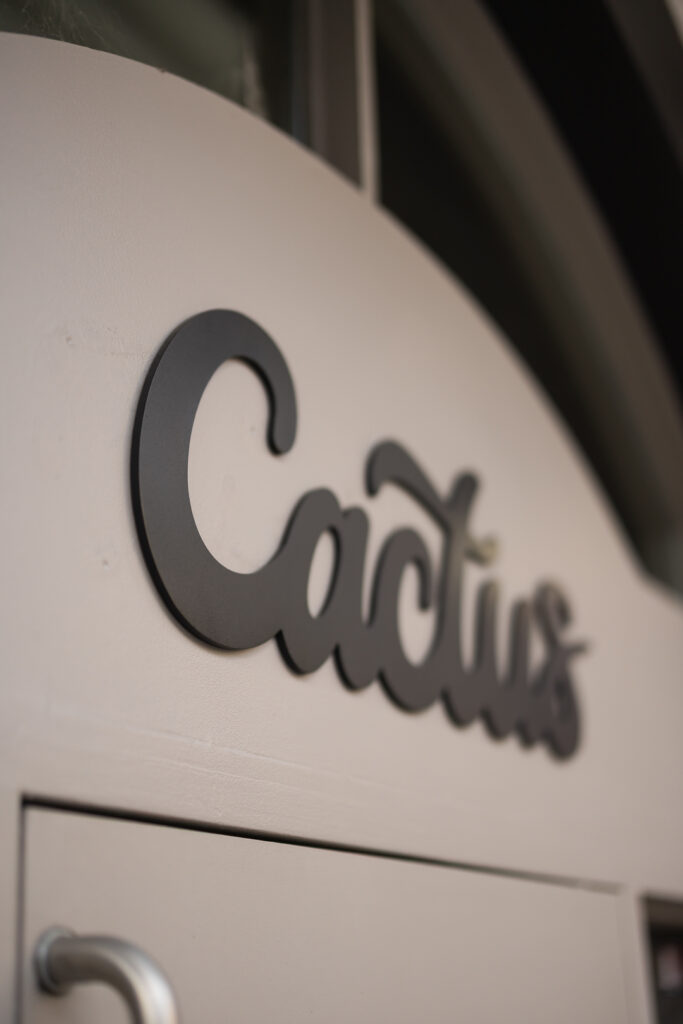
At the main entrance, we fabricated the Cactus logo from flat-cut aluminum, painted to match the client’s color specifications and flush-mounted above the door.
Flat-cut metal is an excellent option when you want dimensional signage without the added depth of fabricated letters or cabinets. It provides a clean, architectural appearance and works especially well for entrances and other locations where customers will see the sign from relatively close range.
For Cactus, the dark aluminum logo creates strong contrast against the light-colored building facade while allowing the unique script of the logo to remain the focus.
Add Dimension for Greater Visibility
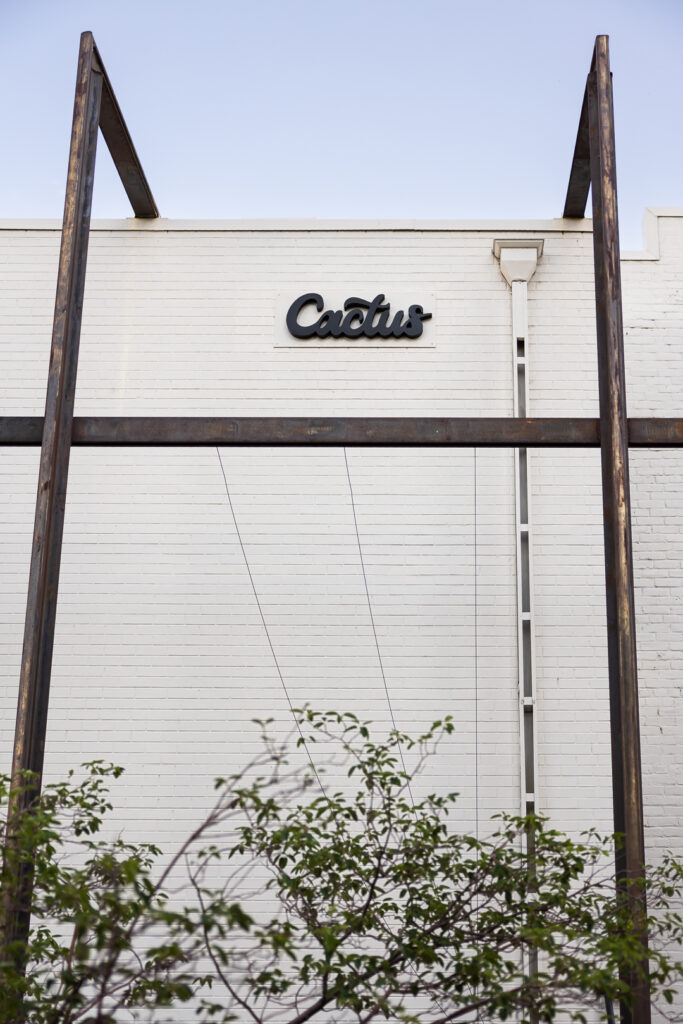
For another exterior elevation, we fabricated a deeper dimensional aluminum version of the Cactus logo mounted to an aluminum backer panel.
Increasing the depth of a sign can make a significant difference in how it appears on a building. Dimensional lettering creates natural highlights and shadows as lighting conditions change throughout the day, helping the sign stand apart from the surface behind it.
This approach gave the Cactus logo more visual presence while maintaining the simple black-and-white aesthetic of the overall signage package.
Dimensional fabricated signs can be a great choice for businesses that need more impact than flat-cut lettering but don’t necessarily require illumination.
Consider Illumination for Street-Facing Signage
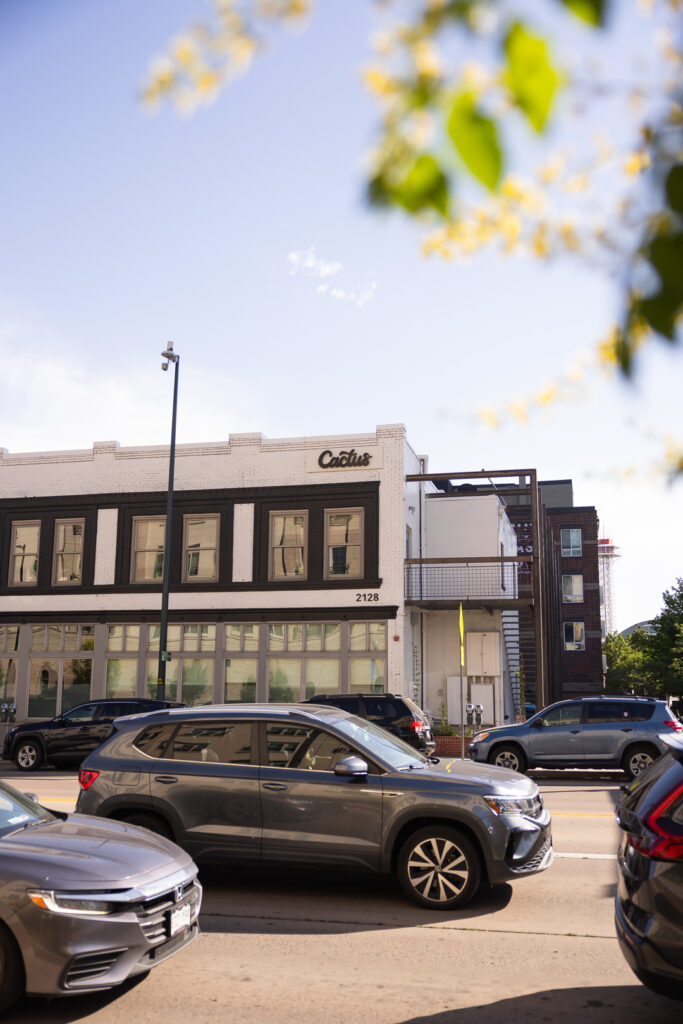
For the 15th Street elevation, visibility from the surrounding street was an important consideration, so we fabricated a halo-illuminated version of the Cactus logo.
With halo illumination, the light source is concealed behind the dimensional letters and directed toward the mounting surface. The reflected light creates a glow around the perimeter of the logo rather than illuminating the face of the letters.
During the day, the sign reads as clean dimensional lettering. At night, the halo effect adds visibility while creating a more subtle architectural appearance than traditional face-lit channel letters.
For the Cactus installation, the dimensional logo was mounted over a discreet wireway backer that houses the necessary electrical components while keeping the overall appearance streamlined.
Keep the Brand Consistent Even When Construction Changes
One of the most important parts of designing a multi-sign package is understanding which elements should remain consistent and which can change.
For Cactus, the logo itself remained the visual anchor throughout the project. The color and overall aesthetic stayed consistent while the materials, depth, mounting method and illumination changed according to each location.
That flexibility allowed us to create three signs that clearly belonged together without forcing the exact same fabrication method into three very different applications.
This approach can be especially valuable for corporate offices, multifamily developments, restaurants, retail spaces and other commercial properties that need signage in several locations.
Which Sign Type Is Right for Your Building?
There isn’t one sign construction method that works best for every building.
When we’re helping a client determine the right approach, we consider factors such as:
Viewing distance: How far away will people be when they need to identify the business?
Sign location: Is it above an entrance, high on a building or facing a major street?
Day and nighttime visibility: Does the sign need to be identifiable after dark?
Architecture: Which materials and mounting methods complement the building rather than looking added on?
Brand aesthetic: Does the business call for something understated and architectural or bold and highly visible?
Local sign regulations: What does the municipality allow in terms of size, placement and illumination?
Budget: Where will additional depth, fabrication or illumination provide the most value?
Answering those questions before fabrication begins can help create a signage package that looks intentional across an entire property.
Custom Business Signage in Denver
At RiNo Sign Works, we design, fabricate and install custom commercial signage for businesses, developers, architects and property managers throughout the Denver area.
Our capabilities include flat-cut metal lettering, dimensional letters and logos, illuminated signage, halo-lit signs, channel letters, cabinets, monument signs, wayfinding systems and complete interior and exterior signage packages.
The Cactus project is a great example of how different fabrication techniques can work together to create one cohesive visual identity.
If you’re planning a new signage project, renovating an existing property or trying to determine which type of sign will work best for your building, contact RiNo Sign Works to discuss your project.